A Frank Conversation About One of America's Most Misunderstood Conditions
When most people hear the word hoarder, they picture a television show. They imagine rooms packed floor to ceiling with possessions, narrow pathways through stacks of boxes, or homes that seem impossible to enter.
What they don't picture is the person living there.
Behind many hoarding situations is someone who has experienced profound loss, trauma, depression, anxiety, or overwhelming life changes. Hoarding isn't simply about collecting too much stuff. It is a recognized mental health disorder that involves persistent difficulty discarding possessions, regardless of their actual value.
This isn't laziness.
It isn't stubbornness.
And it certainly isn't something that can be solved by saying, "Just throw it away."
How It Begins
Very few people wake up one morning and decide to become a hoarder.
Instead, it often starts with something painful.
A spouse dies. A parent passes away. A divorce changes everything. An illness limits mobility. Depression steals motivation. Grief quietly settles into everyday life.
Suddenly every object begins carrying emotional weight.
A sweater belonged to a husband. A broken lamp reminds someone of a childhood home. A box of magazines contains one article they meant to read. A receipt brings back memories of a happier vacation.
The possessions slowly become memories, and the memories become impossible to part with.
Years pass. The piles grow. The decisions become harder. Eventually, the house itself becomes overwhelming.
More Than Clutter
Hoarding affects far more than appearance.
Walkways disappear. Fire hazards increase. Plumbing and electrical systems become difficult to reach. Mold, insects, rodents, and structural damage often remain hidden until they become serious problems. Emergency responders may struggle to reach someone during a medical emergency.
Friends stop visiting. Family members drift away. Children and grandchildren stay home. Isolation quietly becomes another layer of the problem.
It's a Mental Health Issue
Hoarding Disorder is recognized by the American Psychiatric Association as a mental health condition. It frequently occurs alongside depression, anxiety disorders, obsessive-compulsive symptoms, post-traumatic stress disorder, or prolonged grief.
The good news is that treatment can help.
Cognitive Behavioral Therapy (CBT), support groups, and experienced mental health professionals have helped thousands of people regain control of both their homes and their lives. Organizations like the National Alliance on Mental Illness (NAMI), the International OCD Foundation (IOCDF), and SAMHSA provide education, referrals, and support for individuals and families.
If someone is experiencing a mental health crisis or thoughts of self-harm, help is available immediately by calling or texting 988, the Suicide & Crisis Lifeline.
Asking for help is not weakness.
It's often the bravest first step.
Why Families Struggle
When loved ones discover a hoarding situation, they often believe they're dealing with a cleaning problem.
The person living there experiences something very different.
Imagine someone walked into your home and threw away your family photographs, your wedding album, your children's artwork, your favorite books, and everything that reminded you of the people you love.
That emotional reaction is often what someone with hoarding disorder feels — even when others see only trash.
This is why well-intentioned "clean-outs" often fail.
Without compassion, the emotional trauma can be overwhelming.
When the Crisis Finally Comes
Sadly, many families don't seek help until circumstances force the issue.
A fall. A hospitalization. Adult Protective Services. A city code violation. Or the death of the homeowner.
Suddenly children who may live hundreds of miles away inherit not just a house, but decades of possessions and thousands of difficult decisions.
The emotional burden can feel crushing.
There Is No Shame in Asking for Help
Professional estate cleanup companies understand these situations require more than dumpsters.
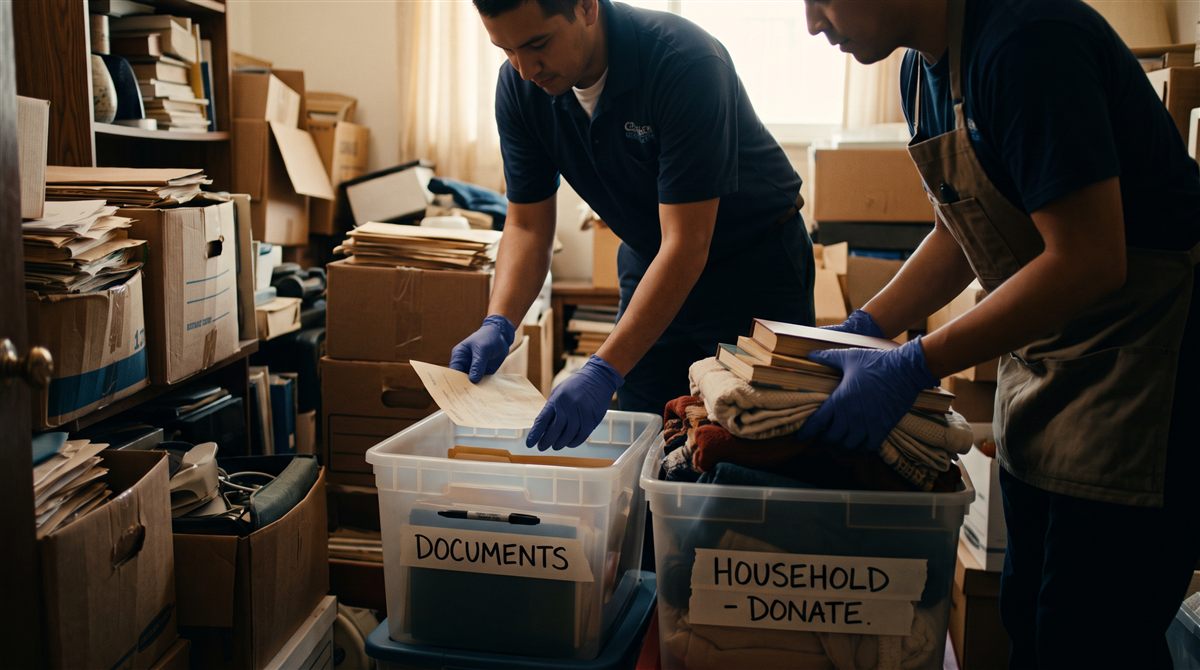
The best professionals work respectfully. They search for family photographs. They recover legal documents. They separate jewelry, military medals, heirlooms, and financial records. They identify items that may have significant value before anything is discarded.
Many also coordinate with locksmiths, handymen, estate sale companies, auction specialists like Everything But The House (EBTH), donation organizations, junk removal crews, and real estate professionals so families don't have to manage dozens of contractors during one of the most stressful times of their lives.
Every House Tells a Story
Experienced cleanup professionals have discovered wedding rings hidden inside tissue boxes. Cash tucked into old books. Military medals mixed with newspapers. Family photo albums inside grocery bags. Life insurance policies buried beneath decades of paperwork. Stock certificates, deeds, wills, and treasured letters often appear where no one expected them.
That's why rushing through a cleanup can become an expensive — and heartbreaking — mistake.
One Final Thought
Every object inside a hoarded home once represented hope.
"I might need this someday." "I'll fix it." "I'll read it later." "It reminds me of someone I loved."
Over time, those hopes became burdens.
The goal isn't simply to empty a house. It's to help a family move forward with dignity while preserving what truly matters.
Sometimes the greatest thing a cleanup team removes isn't the clutter. It's the overwhelming weight a family has been carrying for years.
If your family is facing a hoarding situation, remember this: you don't have to do it alone. Reach out to trusted mental health professionals, local support organizations, and experienced estate cleanup specialists. There is help. There is hope. And with patience, compassion, and the right team, even the most overwhelming home can become the beginning of a new chapter.